
 For years, finance teams dreamed of a single system of record. In reality, that vision is becoming less realistic. The modern organization runs on an average of 106 applications, and finance data is scattered across ERP, payroll, planning, CRM, and industry-specific systems. Depending on the size of your organization, you may also be running multiple ERPs across business units, subsidiaries, or verticals, which can lead to inconsistent data and manual reconciliation, prompting some to move toward a more centralized function.
Because of this, modern finance tech stacks are more powerful than ever, but also more fragmented.
No single system can do it all well.
The question is no longer, "How do we consolidate everything into one system?"
It’s “How do we connect everything so finance has a complete, trusted view of the business?”
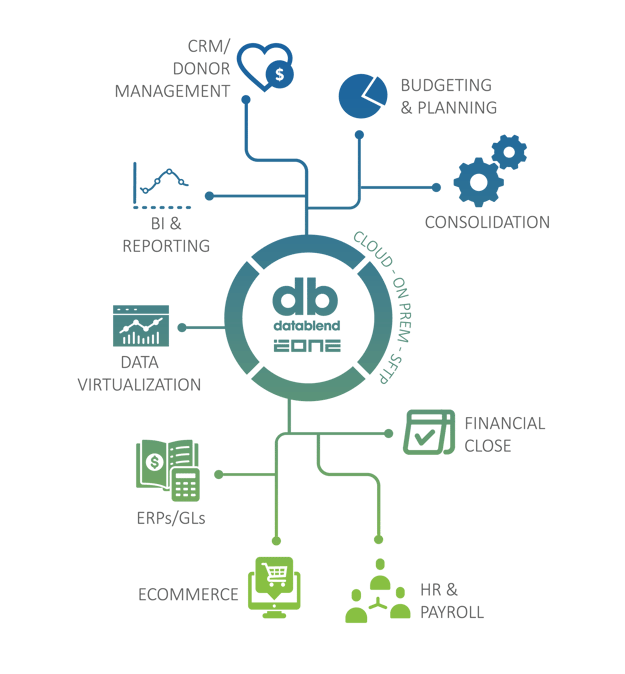 The Rise of the Multi-System Finance Stack
Finance teams today rely on a growing ecosystem of best-of-breed tools. Sage Intacct, Workday Adaptive Planning, ADP, Salesforce, HubSpot, Google Sheets, etc. While finding the best systems for the right purpose seems to make the most sense, on the flip side, disconnected systems create real challenges:
-
Manual exports and uploads slow down close and planning cycles.
-
Inconsistent data definitions lead to conflicting reports.
-
Finance teams spend more time reconciling data than analyzing it.
Why Integration Is Critical
Instead of forcing everything into one system, leading finance teams are building a connected data foundation. Integration platforms act as the glue between systems, ensuring data flows automatically, consistently, and securely across the finance stack you’ve come to rely on.
With automated integrations, finance teams can:
-
Sync payroll, operational, and financial data in real time.
-
Maintain a single source of truth across your key systems (ERP, FP&A, CRM, Payroll, etc.)
-
Reduce manual effort and errors.
-
Accelerate reporting, forecasting, and decision-making.
Through our own customer data, we see that best-in-class finance teams using automated integrations:
-
Produce 2–3x more invoices without adding headcount
-
Reduce processing time by up to 85%
-
Cut manual errors by nearly 100%
-
Improve data entry efficiency by 120%
What to Do Instead
The future of finance isn’t consolidation; it’s connection. Organizations should focus on:
-
Mapping critical data flows across finance and operations.
-
Automating integrations to eliminate manual processes.
-
Empowering finance teams with real-time, trusted data.
At DataBlend, we help finance teams connect the systems they already rely on (without disruption) so they can move faster, close smarter, and plan with confidence.